
Medical Records Can Make or Break Your Car Accident Injury Case
A car accident can turn your life upside down in seconds. Between the pain of your injuries, the stress of missed work, and the flood of calls from insurance adjusters, it’s easy to overlook one of the most important parts of your recovery and your legal case: medical documentation. Medical records after a car accident are vital in seeking compensation.
In this article, we’ll explain how medical records support your car accident injury case, what types of records you should keep, common mistakes that can weaken a claim, and how our Greenville car accident lawyers can help you. If you or a loved one has been hurt in a crash, contact South Carolina Car Accident Lawyers today.
Why Medical Records After a Car Accident Are So Important
When you file a claim after a crash, the insurance company will not take your word that you were hurt. They want proof, and medical records are the clearest form of proof available. Without documented treatment, even a legitimate injury can be dismissed or undervalued.
Proving Your Injuries Are Accident-Related
One of the biggest challenges in any car accident claim is proving that your injuries came from the crash and not from a pre-existing condition or unrelated incident. Medical records after a car accident create a timeline. They show when you first sought treatment, what symptoms you reported, and how your condition progressed. That timeline is what links your injuries directly to the collision.
If there’s a long gap between the accident and your first doctor’s visit, insurance companies will often argue that something else caused your injury, or that it wasn’t serious to begin with. Prompt and consistent documentation closes that gap.
Supporting the Value of Your Claim
Medical records also help establish how serious your injuries are and how long you’re expected to need care. Broken bones, herniated discs, whiplash, and traumatic brain injuries all look very different on paper, and the value of a claim often follows the extent of documented treatment. Detailed records give your attorney the evidence needed to pursue compensation that reflects the true impact of your injuries.

Important Car Accident Injury Medical Records
Not all documentation looks the same, and different types of records serve different purposes in a claim. Some of the most important medical records after a car accident injury include:
- Emergency room and ambulance reports – These capture the immediate aftermath of the crash, including your initial complaints and observed injuries.
- Diagnostic imaging – X-rays, MRIs, and CT scans provide objective evidence of fractures, disc damage, or internal injuries.
- Physician notes and treatment plans – These document your ongoing symptoms, diagnoses, and the care your doctor recommends.
- Physical therapy and rehabilitation records – These show the work involved in recovery and any lingering limitations.
- Prescription records – Medications prescribed for pain, inflammation, or related conditions add another layer of proof.
- Mental health and counseling records – If the accident caused anxiety, PTSD, or other psychological effects, these records help capture the full scope of your harm.
An ER report alone might not capture the long-term effects of a spinal injury, while physical therapy notes might not explain what caused the injury in the first place. Together, they build a complete and credible picture of your accident and recovery.
The Connection Between Medical Treatment and Legal Compensation
Medical records don’t just support your claim; they largely determine its value. Insurance adjusters and, if necessary, juries rely heavily on documented treatment.
How Insurance Companies Use Your Records
Insurance companies review medical records looking for consistency, and sometimes for reasons to reduce a payout. They pay close attention to how quickly you sought treatment, whether you followed your doctor’s advice, and whether your reported symptoms match what’s documented at each visit. Any inconsistency can be used to argue that your injuries are less serious than claimed.
Calculating Damages With Medical Evidence
Compensation in a car accident case typically includes both economic and non-economic damages. Economic damages, like medical bills, lost wages, and future treatment costs, are calculated directly from your medical records and billing statements.
Non-economic damages, such as pain and suffering, are harder to quantify. But medical records still support these damages. Detailed notes about pain levels, sleep disruption, and limitations on daily activities help demonstrate the human impact behind the numbers.
Common Mistakes That Can Hurt Your Car Accident Claim
Even a strong case can be weakened by simple mistakes made in the days and weeks following an accident. Some of the most common issues include:
- Delaying treatment after the crash, even when injuries seem minor at first
- Gaps in care, such as missed follow-up appointments or skipped physical therapy sessions
- Not following your doctor’s recommendations, which can suggest your injury isn’t as severe as reported.
- Failing to disclose all injuries during early medical visits, which can make it harder to connect new symptoms to the accident later.
How Gaps in Treatment Are Used Against You
Insurance companies frequently point to gaps in treatment as evidence that an injury either wasn’t serious or was caused by something other than the accident. Even a short break in care, especially early on, can give an adjuster an opening to dispute your claim. Consistent, well-documented treatment is one of the simplest ways to protect your case.
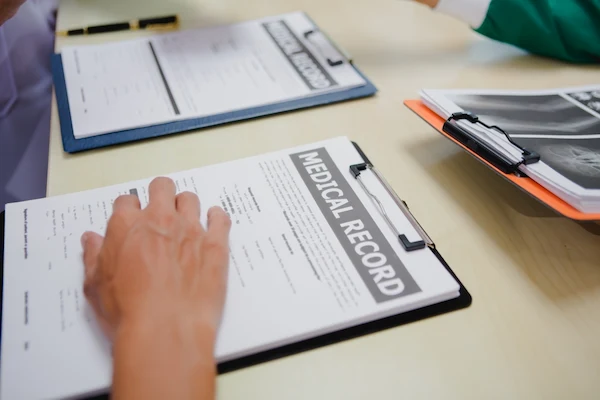
Tips for Protecting Your Medical Records After a Car Accident
Taking a few proactive steps can make a significant difference in how your claim is evaluated:
- Seek medical attention immediately, even if your injuries seem minor. Some injuries, like whiplash or concussions, don’t show symptoms right away.
- Keep copies of everything, including bills, discharge paperwork, imaging reports, and prescription records.
- Follow through on all recommended treatment, including physical therapy, specialist visits, and prescribed medication.
- Keep a personal injury journal noting your pain levels, limitations, and how your injuries affect daily life.
- Be cautious about sharing records, and only provide them to your insurance company or the other party’s insurer with your attorney’s guidance.
Think of your medical records as the paper trail of your recovery. The more complete and consistent that trail is, the harder it becomes for an insurance company to dispute your claim.
How a Car Accident Attorney Uses Medical Records to Build Your Case
Gathering and organizing medical records after a car accident can be overwhelming, especially while you’re focused on healing. This is where an experienced attorney becomes invaluable.
A skilled car accident attorney knows how to request complete medical histories from every provider involved in your care, identify gaps or inconsistencies before the insurance company does, and, when needed, consult with medical experts to explain the long-term impact of your injuries. This turns a stack of medical paperwork into clear, persuasive evidence during negotiations or, if necessary, at trial.
Contact South Carolina Car Accident Lawyers Today
Medical records after a car accident are more than routine documentation. They can decide whether an injury claim succeeds or falls short. From proving your injuries are accident-related to calculating the full value of your damages, these records play a central role at every stage.
At South Carolina Car Accident Lawyers, we help injured victims throughout Greenville, Spartanburg, and communities across the state. Our team knows how insurance companies evaluate medical records. We carefully build your case and negotiate for the settlement you deserve.
If you or a loved one has been injured in a car crash, don’t wait to get legal help. Contact South Carolina Car Accident Lawyers today for a free, no-obligation consultation. You pay nothing unless we win your case.